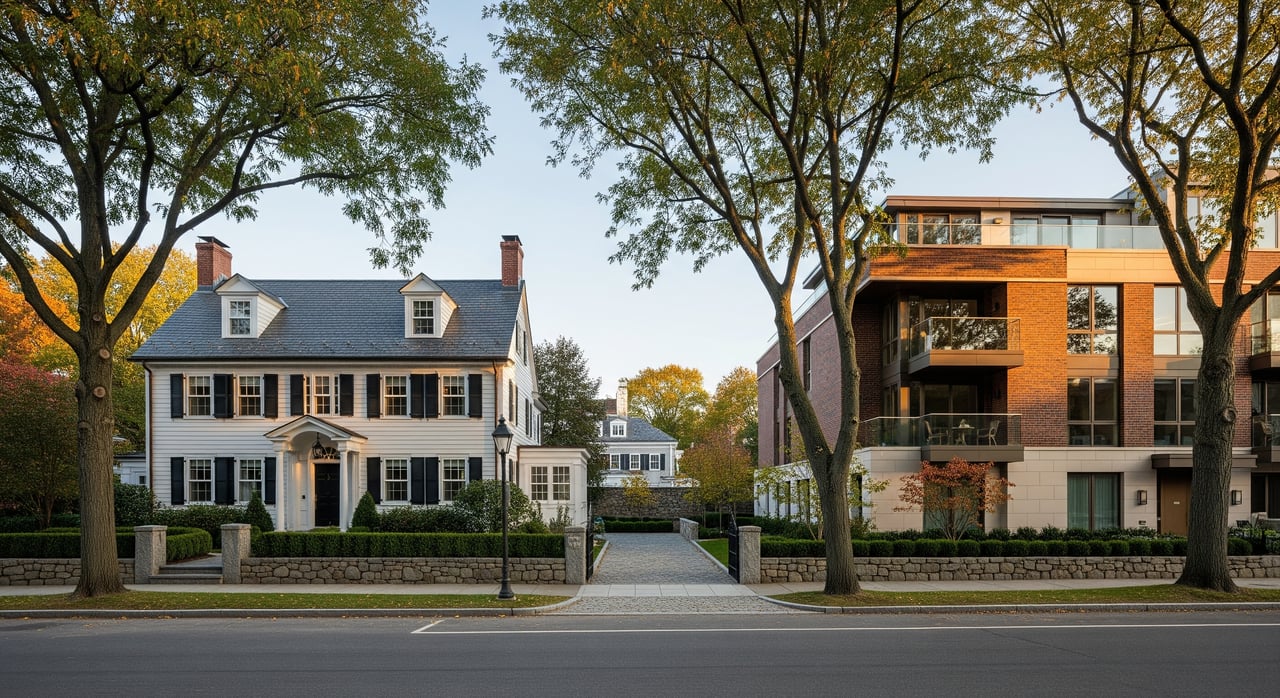
Choosing between a condo and a single-family home in Newton can feel like comparing apples to oranges. You want the right mix of location, space, commute, and monthly costs, and there is a lot to weigh. The good news: once you focus on how you live day to day, the best fit becomes clear. In this guide, you will learn how condos and single-family homes stack up in Newton on costs, maintenance, parking, privacy, and resale, plus a practical checklist you can use on your next tour. Let’s dive in.
Newton market basics
Villages and housing mix
Newton is made up of distinct villages like Newton Centre, West Newton, Newton Highlands, Newtonville, Waban, Auburndale, Nonantum, Oak Hill, and Upper and Lower Falls. Each area offers a different mix of property types, walkability, and transit access. Condos cluster around denser village centers and newer multifamily developments. Single-family homes are more common on larger lots in residential villages, which can support higher prices due to land value.
Commute and transit
Commuting shapes buyer preferences across Newton. Portions of the city have MBTA rapid transit, commuter rail, and bus routes, yet access varies by village and even by street. Highway access to Route 9, I‑90/Mass Pike, and I‑95/Route 128 is another key factor if you drive. If transit is a priority, verify the exact distance to stations and typical service patterns during your commute window.
Rules and documents to know
Massachusetts condominium law and local Newton zoning guide how condo associations operate and what uses are allowed. If you are considering a condo, plan to review the condominium declaration and bylaws, plus any local overlays that may affect rentals or short-term occupancy. If you are focused on single-family, be aware of possible historic or conservation restrictions that can shape exterior changes.
Cost comparison at a glance
Purchase price and down payment
- Single-family homes typically sell at higher median prices than condos in the same community because of lot and land value.
- Condos often offer a lower entry point. Prices vary by village, building age, amenities, parking, and overall condition.
To make an apples-to-apples decision, compare total monthly carry rather than just price.
Taxes, insurance, and fees
- Property taxes: Newton taxes are based on assessed value. Single-family owners pay on the land and structure. Condo owners pay on the unit’s assessed value.
- Insurance: Condo owners usually carry an HO‑6 policy for interior coverage and personal liability. The association maintains master insurance for the building shell and common areas. Single-family owners typically carry an HO‑3 policy that covers the entire structure and property.
- HOA fees (condos): Monthly fees typically cover exterior maintenance, common utilities, snow removal, landscaping, master insurance, and reserves. Confirm what is included and how much is budgeted for reserves.
Utilities and operating costs
- Condos may include heat, hot water, trash, or common utilities in the HOA fee, which can lower monthly bills.
- Single-family owners pay all utilities directly. Larger living areas and outdoor systems can increase costs.
True monthly cost
Create a side-by-side “true monthly cost” for each property you are considering:
- Mortgage payment
- Property taxes
- Insurance (HO‑6 for condo, HO‑3 for single-family)
- HOA fee for condos
- Average utilities
- Maintenance reserve (set aside more for single-family systems and exterior items)
- Potential special assessments for condos
This approach helps you compare what you will actually spend each month, not just the list price.
Maintenance and HOA realities
What you maintain in a condo
Condo owners usually handle interior items inside the unit. The association typically maintains exterior elements like the roof, siding, landscaping, snow removal, and shared systems such as elevators, per the governing documents. Always confirm the “walls-in” versus “walls-out” responsibilities in the declaration and bylaws.
What you maintain in a single-family
Single-family owners are responsible for the entire property, inside and out. Plan and budget for periodic big-ticket items like roofing, siding, HVAC, windows, driveway, and any sewer or septic work. If you prefer full control over timing and vendors, this autonomy can be a plus.
Reserve funds and special assessments
Healthy condo associations fund reserves for predictable capital projects and complete periodic reserve studies. Thin reserves or deferred maintenance increase the risk of special assessments. Ask for the latest reserve study, audited financials, annual budget, minutes from recent meetings, and insurance certificates so you can gauge risk before you commit.
Governance and building rules
Condo bylaws may set policies on rentals, subletting, pets, renovations, exterior appearance, and short-term occupancy. Some associations also limit investor ownership. Review voting rules, board composition, and whether management is professional or self-managed. Clear, stable governance supports smoother ownership and resale.
Privacy, parking, and lifestyle fit
Space and privacy
- Single-family: More separation from neighbors, private yards, and flexibility for additions or outdoor features. A good fit if you want space for gardens, play areas, or hobbies.
- Condo: Shared walls and common entries are typical, though some buildings offer private terraces or small deeded outdoor spaces. Expect less separation than a detached home.
Parking and vehicles
- Single-family: Often includes a driveway and sometimes a garage, which simplifies storage and multi-car living.
- Condos: Parking varies by building. You might see deeded garage spaces, assigned surface spaces, or no guaranteed parking. In denser villages, on-street rules and resident permits can apply. Confirm what is deeded to the unit and how guest parking works.
Amenities vs autonomy
- Condos often include amenities such as fitness rooms, storage, package areas, on-site management, and snow removal. This can be ideal if you prefer convenience.
- Single-family homes offer autonomy over paint colors, landscaping, and how you use your property, balanced by the responsibility to coordinate and pay for all upkeep.
Work patterns and routine
Remote or hybrid work can make a dedicated home office and yard space a priority, which often points toward single-family. If you rely on public transit or prefer a lock-and-leave lifestyle, a condo near a village center may fit better.
Resale and financing considerations
What supports single-family value
For single-family homes, value is influenced by lot size, location within the village, condition, and a functional layout. Long-term demand for well-located lots helps support values. Modernization of kitchens, baths, and systems often improves marketability and return.
What drives condo value
Condo resale is shaped by building condition, association health, amenities, parking, and HOA fees. Rental policies and owner-occupancy levels can affect demand and financing. Newer projects with modern finishes can command premiums, though supply cycles matter.
Timing and lending notes
Condos can close quickly when documents are straightforward, yet lender requirements around reserves and owner-occupancy can slow some deals. Single-family timelines hinge on condition, appraisal comps, and pricing. Well-presented homes in sought-after locations tend to draw strong interest.
Which is right for you? Scenarios
- First-time buyer and commuter: A condo in a walkable village near transit can offer a lower entry price and less maintenance.
- Growing household seeking outdoor space: A single-family with a yard provides flexibility for play, pets, and future projects.
- Downsizer or empty nester: A condo with elevator access, low maintenance, and practical amenities can simplify daily life.
- Investor or part-time resident: A condo may fit, but review rental rules and owner-occupancy ratios before you buy.
Your Newton due-diligence checklist
Use this checklist to compare two specific properties side by side.
Financial
- Request the current tax bill and recent assessment.
- Calculate the true monthly cost: mortgage, taxes, insurance, HOA (if condo), average utilities, and a maintenance reserve.
- For condos, confirm the HOA fee, what it includes, and the fee history.
Legal and governance
- For condos: obtain the declaration, bylaws, most recent budget, reserve study, master insurance policy, and 12–36 months of meeting minutes.
- For single-family: check for conservation or historic restrictions, easements, and any septic or well records if applicable.
Physical condition
- Single-family: schedule a full inspection covering structure, roof, HVAC, plumbing, and electrical. In older areas, ask about items like lead pipes, knob-and-tube wiring, or oil heat.
- Condo: inspect the unit and, where possible, evaluate common areas and the building envelope. Ask about the age and timeline for roofs, boilers, windows, and major systems.
Parking and logistics
- Verify deeded or assigned parking and guest policies. If relying on street parking, review local permit requirements and enforcement.
Resale and financing
- Pull recent comparable sales in the same village and property type, and note days on market and price per square foot.
- For condos, check owner-occupancy and rental percentages in the documents, since those can affect lending options.
Neighborhood fit
- Visit at different times and days to gauge traffic, noise, and street activity.
- Confirm your commuting routes and timing. If schools matter to you, verify school assignment directly with the district.
Ready to compare properties?
If you want a clear, side-by-side look at your best options in Newton, we can help you run exact monthly cost comparisons, request the right condo documents, and pressure test resale potential by village and property type. Our family-led team brings neighborhood-savvy advice and curated access to on and off-market opportunities, so you can move forward with confidence. Start a conversation with the Condon Droney Team and see which path fits your lifestyle and budget.
FAQs
What costs are unique to condos in Newton?
- Condo owners pay monthly HOA fees that usually cover exterior maintenance, common utilities, snow removal, landscaping, master insurance, and reserves. You should also plan for the possibility of special assessments if reserves are low.
How do HOA rules affect renting my unit?
- Many associations set policies on rental terms, owner-occupancy limits, and short-term stays. Review the bylaws and any amendments to understand what is allowed before you buy.
Are single-family homes more expensive to maintain?
- Single-family owners manage and fund all interior and exterior upkeep, from roofing and siding to HVAC and landscaping. Costs vary by age and condition of systems, so build a maintenance reserve into your budget.
How important is parking in Newton condo buildings?
- Parking availability varies by building and village. Confirm whether parking is deeded or assigned, how many spaces are included, guest options, and whether on-street permits are needed.
What documents should I review before buying a condo?
- Request the declaration and bylaws, current budget, reserve study, master insurance policy, and 12–36 months of meeting minutes. These reveal financial health, rules, upcoming projects, and risk of special assessments.
How do Newton’s villages impact value and fit?
- Villages differ in housing mix, walkability, transit access, and lot sizes. These factors influence both daily convenience and long-term marketability, so match the village to your commute and lifestyle first, then choose the property type.