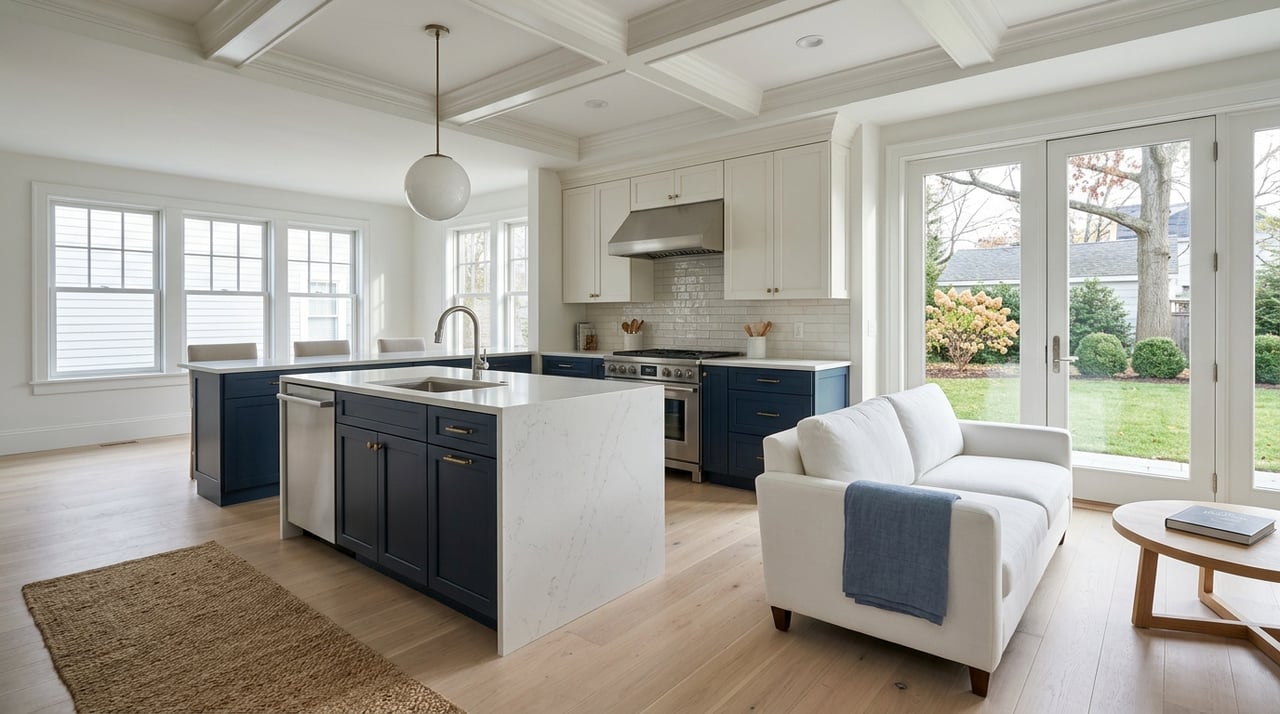
You can outgrow a home you still love. If your Dedham starter home no longer fits your day-to-day life, you are not alone. Many owners reach a point where an extra bedroom, a better work-from-home setup, more storage, or a larger yard starts to matter more than keeping the same footprint. This guide will help you think through the move-up process in Dedham, from timing and budgeting to comparing nearby towns and making a plan that feels realistic. Let’s dive in.
Why Dedham Makes Sense for Moving Up
Dedham gives move-up buyers a useful middle ground. It is an owner-occupied community with a 73.4% owner-occupied rate, 10,530 households, and a median owner-occupied home value of $661,800, according to the U.S. Census QuickFacts for Dedham. That helps explain why many owners choose to stay in town and trade up rather than leave the area entirely.
For many households, the appeal is balance. Dedham offers access to a suburban setting while staying connected to Boston, and the average commute time is 29.3 minutes based on the same Census data. If you want more space without jumping straight into the price range of some nearby towns, Dedham often stays in the conversation for good reason.
What the Dedham Market Looks Like
The first thing to know is that Dedham remains competitive, even if the exact numbers vary by source and property type. Redfin’s March 2026 Dedham market snapshot shows a $710,000 median sale price, about 5 offers on average, and 21 days on market. That points to a market where well-priced homes can still move quickly.
Other data tells a similar story with slightly different slices. Realtor.com’s February 2026 02026 overview reports 36 homes for sale, 28 median days on market, and a 102% sale-to-list ratio, while the Massachusetts Association of Realtors reported a $935,000 median single-family sales price, 1.1 months of inventory, and 59 days on market in February 2026. The takeaway is simple: inventory is still fairly tight, and your timing matters.
Should You Sell First or Buy First?
This is one of the biggest questions for move-up buyers, and there is no one-size-fits-all answer. The Consumer Financial Protection Bureau notes that families who are moving often try to sell first before buying another home. That approach can reduce uncertainty because you will know how much equity you actually have to work with.
Selling first can make your budget clearer, but it can also create pressure if you have not found your next home yet. Buying first may feel more convenient, but it can be riskier if your current home has not sold and you are carrying two housing payments. The right path usually depends on your available savings, how much equity you have, and how much monthly overlap you can comfortably handle.
Why Preapproval Matters Early
If you are planning to move up, get preapproved before your home search becomes urgent. The CFPB explains that a preapproval letter is tentative, not guaranteed, and often expires after 30 to 60 days, so timing still matters. It also notes that you do not need a signed purchase contract to apply for a Loan Estimate, which can help you compare options earlier in the process.
Preapproval gives you a realistic price range, but it does not automatically tell you what will feel comfortable every month. That distinction matters when you are trading a lower-cost starter home for a larger property with higher taxes, utility bills, and upkeep. In other words, qualification is not the same thing as peace of mind.
How to Budget for a Bigger Home
The listing price is only part of the picture. Fannie Mae’s affordability guidance says housing costs should generally stay around 25% to 30% of gross income, and closing costs often run 2% to 5% of the purchase price. It also recommends planning for moving expenses, utility setup, maintenance, and surprise repairs.
On the sale side, the CFPB notes that most home sales typically cost about 6% of the sale price in commission and transaction fees. That means your move-up math should include both sides of the transaction, not just your expected down payment on the next home. If your current home has appreciated, you may have meaningful equity, but part of that equity will go toward selling costs and the expenses of getting into the next property.
Costs to model before you move
- Your remaining mortgage balance
- Estimated sale proceeds after transaction costs
- Down payment for the next home
- Buyer closing costs, often 2% to 5%
- Monthly principal, interest, taxes, and insurance
- Utility and maintenance increases tied to a larger home
- Moving and setup costs
- Cash reserves after closing
Don’t Ignore Property Taxes
Property taxes deserve a full spot in your budget, especially in a move-up purchase. Dedham’s FY2026 residential tax rate is $12.30 per $1,000 of assessed value, and the town reports an average single-family assessed value of $810,871 with an average tax bill of $9,973.71 on the Dedham Assessors page. That is a real monthly cost, not a side note.
This is also why comparing towns requires more than looking at tax rates alone. Needham’s residential tax rate is lower at $10.83 per $1,000, but its home prices are much higher, so the overall cost of ownership can still be significantly greater. A lower rate does not always mean a lower payment.
How Dedham Compares to Nearby Towns
If you are open to moving beyond Dedham, it helps to compare nearby options through the lens of space, commute, and monthly cost. Based on Redfin market data for Dedham and nearby communities, Dedham sits closer to West Roxbury and Norwood on price than it does to Needham or Westwood.
Here is the broad picture:
| Area | Median sale price | Market pace |
|---|---|---|
| Dedham | $710,000 | 21 days, 5 offers avg. |
| West Roxbury | $742,000 | 33 days, 2 offers avg. |
| Norwood | $774,500 | 16 days, 8 offers avg. |
| Westwood | $1.2 million | Higher price tier |
| Needham | $2.1 million | Very competitive |
West Roxbury and Norwood are often the most relevant nearby comparisons if you want more space without making a dramatic jump in price. Needham and Westwood typically sit in a different cost bracket, even if they are on your wish list.
What to Compare Beyond Price
Price gets attention first, but it should not be the only factor guiding your move. For many move-up buyers, the real decision comes down to the daily rhythm of life in the next home. You may be weighing lot size, bedroom count, storage, home office needs, and commute convenience all at once.
Dedham is in the MBTA service area, and Mass.gov’s transportation information notes that MBTA commuter rail lines serve Eastern Massachusetts. If commuting matters to your household, it is smart to compare addresses based on actual travel patterns, not just town names. A home that looks perfect on paper may feel different once you factor in a school schedule, work hours, and how often you need transit access.
Useful move-up trade-offs to review
- More square footage versus higher monthly payment
- Larger lot versus longer commute
- Staying in Dedham versus expanding your search radius
- Renovated condition versus future project potential
- Lower purchase price versus higher ongoing maintenance
How to Check School Information Responsibly
If school planning is part of your move, use official sources and address-specific information. Dedham Public Schools is a seven-school district that includes the Curran Early Childhood Education Center, four elementary schools, Dedham Middle School, and Dedham High School, according to the district directory. The same directory also lists school hours, which can be helpful when you are thinking about transportation and work schedules.
For school comparisons, the most reliable starting point is the Massachusetts DESE report card system. It uses measures like achievement, growth, chronic absenteeism, graduation, and advanced coursework completion. That gives you a more objective way to compare information than relying on opinions or general neighborhood talk.
How to Time the Move-Up Process
The smoothest move-up transactions usually start earlier than people expect. If your goal is to buy more space in Dedham or a nearby town, it helps to line up financing, estimate your sale proceeds, and prepare your current home for market before your need becomes urgent. In a competitive market, waiting until you feel cramped can put you on the clock.
A simple sequence often works best:
- Review your equity and monthly comfort zone.
- Get preapproved and request loan estimates.
- Prepare your current home for market.
- Price and launch with a clear sale strategy.
- Begin the next-home search with your real numbers in hand.
That kind of planning can reduce stress and give you better options on both sides of the transaction.
Making Your Starter Home Work Harder
Your current home is not just the place you are leaving. It is also the asset helping fund your next chapter. Thoughtful preparation can make a real difference when you are selling and buying in the same season, especially if you want to maximize proceeds and keep your timeline on track.
That is where polished presentation matters. Professional staging, strong photography, and a clear launch plan can help your home show at its best and attract serious buyers quickly. For move-up households, that can create more confidence when it is time to make an offer on the next place.
Your Next Step in Dedham
Moving up in Dedham is not only about getting more square footage. It is about finding the right fit for your budget, your routine, and the way you want to live over the next several years. When you compare your options carefully, model the full monthly cost, and plan the sale and purchase together, you can make the leap with much more confidence.
If you are thinking about trading your starter home for more space in Dedham or a nearby town, the Condon Droney Team can help you map out timing, prepare your current home for market, and explore on-market and private opportunities with a local, relationship-first approach.
FAQs
Should I sell my Dedham home before buying another one?
- Often, yes. The CFPB notes that families who are moving commonly try to sell first before buying, since it can make your budget and available equity much clearer.
How much cash should I set aside for a Dedham move-up purchase?
- In addition to your down payment, plan for buyer closing costs that often run 2% to 5% of the purchase price, plus moving costs, utility setup, maintenance, and cash reserves for repairs.
How competitive is the Dedham housing market for move-up buyers?
- Dedham remains competitive. Redfin’s March 2026 data shows a $710,000 median sale price, about 5 offers on average, and 21 days on market.
How do Dedham home prices compare with nearby towns?
- Dedham is generally priced closer to West Roxbury and Norwood than to Needham or Westwood, which are typically in a much higher price range.
How can I compare Dedham schools when choosing an address?
- Use official sources. The Dedham district directory and Massachusetts DESE report cards are stronger tools than anecdotal opinions when you are comparing school-related information.
What monthly costs matter most when moving up in Dedham?
- Focus on the full payment, including mortgage, property taxes, insurance, utilities, maintenance, and reserves, rather than looking at purchase price alone.